eCommerce Intelligence & Decision Systems
eCommerce teams rarely have a shortage of reports. The harder problem is getting a clear view of what changed, why it matters, and who needs to act. This work brings together the reporting patterns I use to make marketplace, inventory, financial, marketing, and operational reviews more useful.
The examples use generic information. Employer reports, internal metrics, customer data, and private systems are not shown.
The report is usually not the hard part
ERP, marketplace, storefront, advertising, CRM, finance, and inventory systems each tell part of the story. When definitions or timing do not line up, a team can spend the review reconciling reports instead of deciding what to do.
A useful review connects the signal to its business context. It should make the exception clear, show the constraint behind it, and leave the owner and next step visible.
How I approach the review
This is less about one dashboard than a practical way of working with eCommerce data. I build reporting views and review patterns that begin with a business question and end with a clear decision or follow-up.
Show what changed and how it compares.
Explain the business context and constraints.
Keep the owner and next decision visible.
Three habits behind the work
Start with the decision
I begin with the question a team needs to answer, then work backward to the information that will help.
Use the same definition
A report loses trust quickly when teams are working from different definitions, time periods, or source data.
Design for the review
The view should fit the conversation: what changed, what needs attention, who owns it, and what happens next.
A review starts with the change
Here is a simple example: an availability or product-content signal moves outside its expected range. The question is not just whether the number changed. It is whether the source is reliable, what constraint sits behind it, and whether a team needs to act.
What changed
A signal falls outside the expected range or no longer agrees with another business system.
What leaders need to know
Is this a channel issue, a data issue, an inventory constraint, or a difference in how the metric is defined?
What happens next
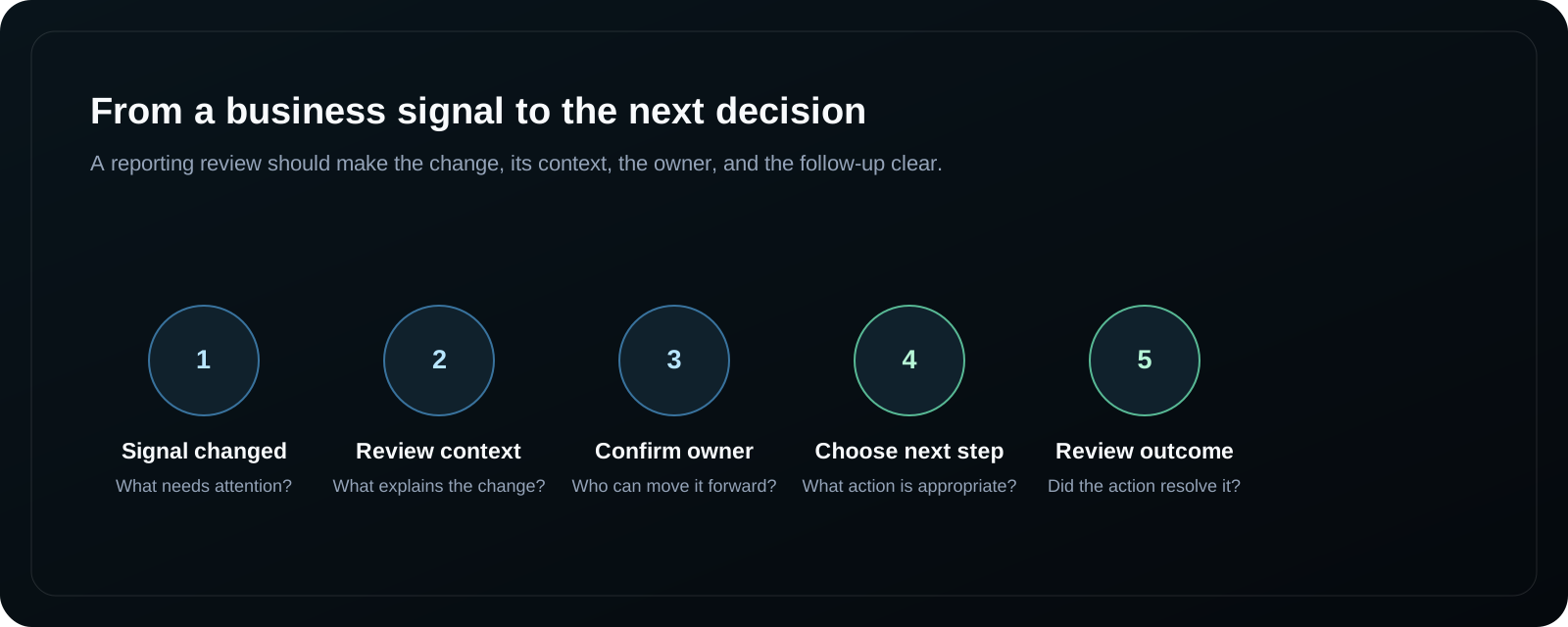
Confirm the source, assign an owner, agree on the next step, and return to the outcome in the next review.
How a signal becomes a decision
The value of a reporting system is not the volume of information it displays. It is the shared path from a change in the business to an accountable next step.
A representative reporting view
The example is organized around changes, exceptions, and the questions a leadership team would need to discuss.
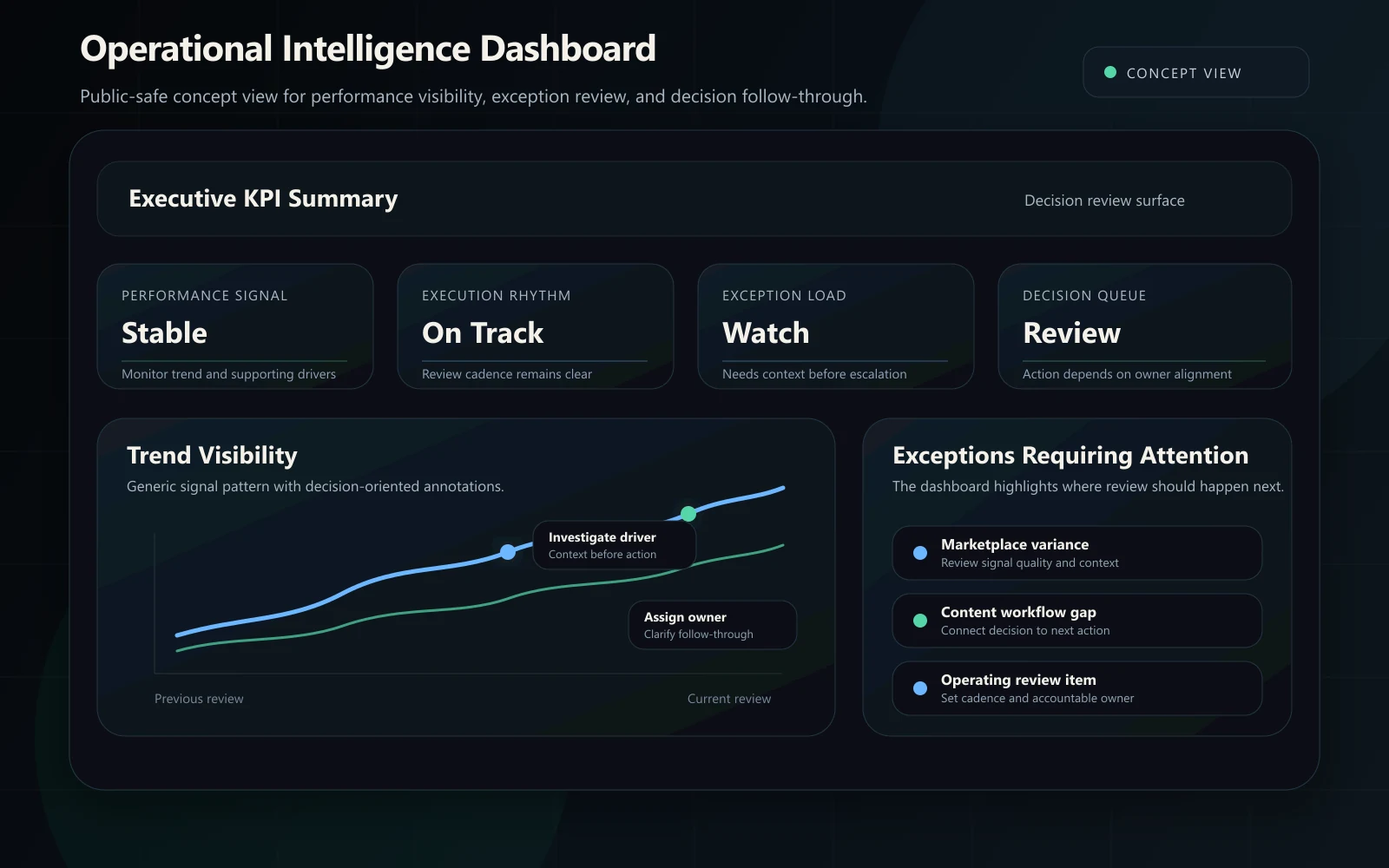
Illustrative executive reporting view showing performance changes, exceptions, and the questions that need attention.
All figures and labels are illustrative. No employer, customer, or private operating data is shown.
What the work has reinforced
The lessons are straightforward, but they change how a reporting system gets designed.
- More metrics do not automatically create more clarity.
- A number without a definition, comparison, and owner is difficult to act on.
- Reporting becomes valuable when it changes the next conversation or decision.